6 Brilliant Public Spaces That Made Their Cities More Livable

The most valuable urban projects often begin with a neglected or difficult piece of the city. Designers then ask how infrastructure can also support walking, shade, play, culture, and chance encounters.
These six public spaces are very different, but all show how design can return overlooked land to daily public life.
The High Line, New York City

The High Line converted an elevated freight railway into a linear park through Manhattan's West Side. Planting, overlooks, seating, and preserved rail details turned obsolete infrastructure into a heavily used pedestrian route.
Superkilen, Copenhagen

Superkilen uses bold color, graphic surfaces, and objects connected to many cultures represented in the surrounding neighborhood. The result works as a park, movement corridor, meeting place, and highly recognizable piece of civic identity.
Cheonggyecheon, Seoul

Cheonggyecheon replaced an elevated road corridor with a restored stream and pedestrian landscape through central Seoul. The project created access to water, walking routes, planting, and cooler spaces within a dense urban district.
Madrid Río, Spain
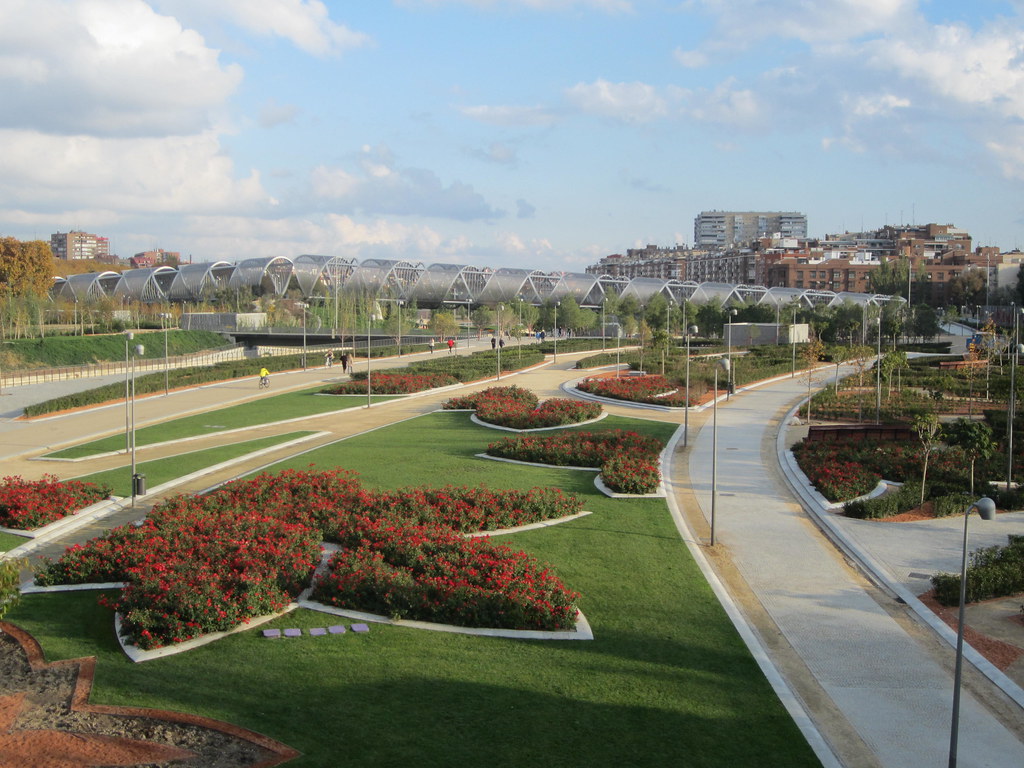
By relocating sections of a major roadway, Madrid opened room for a long connected park beside the Manzanares River. Paths, bridges, play areas, and planting now link neighborhoods that were once divided by traffic infrastructure.
Promenade Plantée, Paris

Paris transformed a former railway viaduct into a planted pedestrian route running above and through the surrounding neighborhood. The Promenade Plantée demonstrated how obsolete transport infrastructure could become connected green public space.
Barcelona's superblocks

Barcelona's superblock approach redirects through-traffic around groups of city blocks, allowing some interior streets to prioritize walking, seating, play, and local access. The idea treats street space as a public resource rather than only a traffic channel.
Definitely Not The Dragon God — EP 31
Definitely Not The Dragon God — EP 32
Definitely Not The Dragon God — EP 33
Definitely Not The Dragon God — EP 34
Definitely Not The Dragon God — EP 35
Definitely Not The Dragon God — EP 36
Definitely Not The Dragon God — EP 37
Definitely Not The Dragon God — EP 38
Definitely Not The Dragon God — EP 39
Definitely Not The Dragon God — EP 40
What do you think ?
0 comments